Correct behaviour at the scene of an accident
From the Rules of the Road published by the Road Safety Authority (RSA). iTest.ie is not affiliated with the RSA — check rsa.ie for the latest edition. Read in the app (contents, picks up where you left off) →
In this section
This section covers what you must do if you have been involved in an accident, whether with another vehicle, another user of the road or with an object along the road. It also outlines what to do if you come across an accident.
What drivers must do at an accident or in an emergency
- If you are involved in an accident, you must stop your vehicle and remain at the scene for a reasonable time. If anyone is injured or appears to need assistance, the driver of the vehicle must offer assistance. If vehicles are blocking the roadway or posing a danger to other road users, the roadway should be marked and the vehicle should then be removed as soon as possible.
- If you are asked by a Garda, you must give your name and address, the address where the vehicle is kept, the name and address of the vehicle owner, the vehicle’s registration number and evidence of insurance, such as the name of your insurance company or a disc or motor insurance certificate. If there is no Garda at the scene, you must give this information to any person involved in the crash or, if requested, to an independent witness.
- If you or another person is injured and there is no Garda at the scene, the accident must be reported to the nearest Garda station.
If you fail to comply with the above requirements, with the intent of escaping civil or criminal liability, in situations where:
- you know someone has been injured and needs medical attention, or
- you know someone has been killed, or are reckless as to that fact,
you may be convicted and receive a fine of up to €20,000 or a prison term of up to 10 years.
- If the accident damages property only, and there is a Garda in the immediate vicinity, you must report it to the Garda. If there is no Garda available, you must provide this information to the owner or the person in charge of the property. If, for any reason, neither a Garda nor the owner is immediately available, you must give all relevant information at a Garda station as soon as reasonably possible.
REMEMBER
Gardaí must conduct mandatory testing of drivers for alcohol at the scene of a crash where someone has been injured, or of a driver who has been injured and removed to hospital.
- You are advised, where possible, to take pictures at the scene of an accident, showing the conditions, the position of vehicles and any damage done.
- Take care when moving damaged or broken-down vehicles and make every effort to warn oncoming traffic of the accident.
- You can warn them by using your hazard lights.
- If you need to ask for another road user’s help to warn traffic, do so right away.
- If you have a reflective advance-warning triangle, (heavy vehicles and buses must have one), place it on the road far enough from the scene of the accident to give enough warning to approaching traffic. A warning triangle should not, however, be used on a motorway or in a place where it would be unsafe.
- When placing a triangle, you should take account of prevailing road conditions, traffic speed and volume. This is particularly important on motorways and dual-carriageways.
- If the breakdown occurs near a bend in the road, make sure you give warning to traffic on both sides of the bend.
- Leaking fuel from a crashed vehicle is dangerous, so be careful approaching any vehicle after an accident.
- Carry at least two high-visibility vests or jackets and a torch in your vehicle. If there is an accident, wear the vest or jacket and use the torch to alert other road users to your presence.
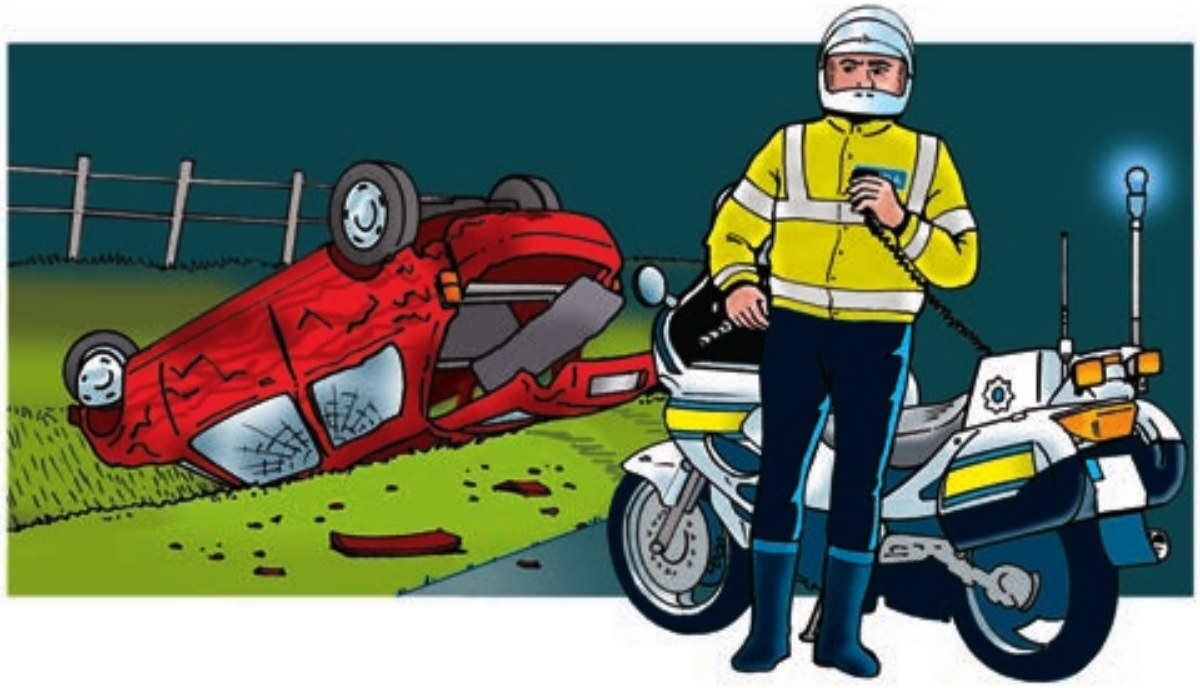
What to do if you arrive at the scene of an accident
| Dos ✓ | Don’ts ✗ |
|---|---|
| Do remain calm. | Don’t panic – assess the situation before taking action. |
| Do switch off the engine and apply the handbrake. | Don’t stay at the scene if there are enough people helping and keeping it under control. |
| Do use a reflective advance-warning triangle if available, except on a motorway. | Don’t get injured yourself – park your vehicle safely out of the way. |
| Do switch on hazard warning lights and parking lights. | Don’t move an injured person unless there is a risk of fire or of the vehicle turning over. |
| Do make sure you are safe as you try to help others. | Don’t attempt to lift a car off an injured person without help. |
| Do make sure others are safe. You should keep any injured people warm by placing coats or rugs around them. | Don’t remove helmets from injured motorcyclists. Neck injuries are common in motorcycle collisions, and any attempt by inexperienced people to remove the helmet may leave the injured person paralysed from the neck down. |
| Do organise bystanders to warn oncoming traffic from both directions, if this has not already been done. Be particularly careful at night so that people giving help are visible (by wearing reflective armbands or bright clothes or carrying lit torches). | Don’t allow anyone to smoke at, or close to, the scene. |
| Do call for help. Contact the emergency services on 999 or 112. | Don’t give an injured person anything to eat or drink. |
Accidents involving dangerous goods
If a vehicle carrying petrol, heating fuel or acid is in an accident, you should:
- keep well clear of the scene;
- position yourself, if possible, to make sure that the wind is not blowing from the accident towards you;
- warn other road users about the danger;
- give as much information as possible about the marking labels on the vehicle when summoning help; and
- let the emergency services do any rescuing.
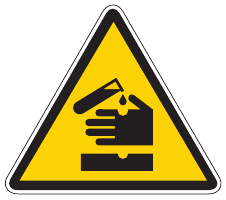
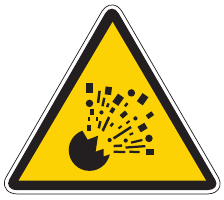
The signs for vehicles carrying hazardous chemicals are shown below.
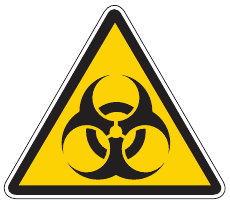
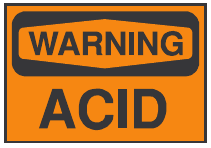
If you would like to know more about transporting dangerous goods by road, contact the Health and Safety Authority (www.hsa.ie) for a guide to the relevant domestic and EU laws governing this area.