Driving licences and categories of vehicles
From the Rules of the Road published by the Road Safety Authority (RSA). iTest.ie is not affiliated with the RSA — check rsa.ie for the latest edition. Read in the app (contents, picks up where you left off) →
In this section
- Categories of vehicles and minimum age for a first learner permit
- Categories of Vehicles/Minimum Age of Driver/Restrictions
- Conditions attached to categories
- Motorcycles
- Trailers
- Heavy goods vehicles and buses
- Driver Certificate of Professional Competence (Driver CPC)
- What is Driver CPC?
- The Driver CPC and you
- Learner permit
- Driver theory test
- Applying for a first learner permit
- First learner permit
- Eyesight and medical reports
- When you must supply a medical report
- If your learner permit expires
- ‘Six-month rule’
- Full driving licence
- Applying for your full licence
- Novice drivers
- Renewing your licence
- Carrying a driving licence
- Driving legally
- Tax
- Insurance
- Vehicles that do not need to display an insurance disc
- National car test
- Commercial vehicle roadworthiness test
- Certificate of Professional Competence
You must hold a current driving licence or a learner permit before driving any motor vehicle in a public place. You can drive only the type of vehicle for which you hold a licence or learner permit. And you must carry your driving licence, learner permit and IBT Certificate of Satisfactory Completion (Am, A1, A2 or A) with you at all times when driving.
This section describes when and how to apply for or renew a driving licence. It also describes the different categories of vehicle to which the licences apply.
Categories of vehicles and minimum age for a first learner permit
The following table outlines the types of vehicle you may drive under each category of licence or permit, and the age you must reach before applying for a first learner permit in the relevant category.
Categories of Vehicles/Minimum Age of Driver/Restrictions
| Licence Category | Description of category since 19 January 2013 | Minimum Age | |
|---|---|---|---|
 |
AM | Mopeds. |
16 years |
 |
A1 | Motorcycles with an engine capacity not exceeding 125 cubic centimetres, with a power rating not exceeding 11 kW and with a power to weight ratio not exceeding 0.1 kW/kg. Motor tricycles with a power rating not exceeding 15 kW. |
16 years |
 |
A2 | Motorcycles with a power rating not exceeding 35 kW, with a power to weight ratio not exceeding 0.2 kW/kg and not derived from a vehicle of more than double its power. |
18 years |
 |
A | Motorcycles Motor tricycles |
24 years or 20 with progressive access (see page 38). People under 21 years of age are not eligible to ride a motor tricycle. |
 |
B | Vehicles (other than motorcycles, mopeds, work vehicles or land tractors) with a Maximum Authorised Mass (MAM) not exceeding 3,500kg, having passenger accommodation for not more than 8 persons in addition to the driver and where the MAM weight of the trailer is not greater than 750kg, or where the combined design gross vehicle weight of the towing vehicle and the trailer does not exceed 3,500kg. Quadricycles (other than those covered by category AM) are also covered by this category. |
17 years |
 |
BE | Combination of drawing vehicles in category B and trailer where the MAM of the trailer is not greater than 3,500kg. |
17 years |
 |
W | Work vehicles and land tractors |
16 years |
 |
C | Vehicles other than those in categories D1 or D, or work vehicles or land tractors, whose MAM is over 3,500kg and which are designed and constructed to carry not more than 8 passengers in addition to the driver; motor vehicles in this category may be combined with a trailer having a MAM which does not exceed 750kg. |
21 years or 18 with a Certificate of Professional Competency (CPC) |
 |
CE | Combination of drawing vehicles in category C and trailer where the MAM of the trailer is greater than 750kg. |
21 years or 18 with CPC |
 |
C1 | Vehicles other than those in categories D1 or D, or work vehicles or land tractors, the MAM of which exceeds 3,500kg but does not exceed 7,500kg and which are designed and constructed to carry not more than 8 passengers in addition to the driver; motor vehicles in this category may be combined with a trailer having a MAM not exceeding 750kg. |
18 years |
 |
C1E | Combination of drawing vehicles in category C1 and trailer where the MAM of the trailer is greater than 750kg and where the MAM of the drawing vehicle and trailer combined does not exceed 12,000kg. Combination of drawing vehicles in category B with trailer where the MAM of the trailer is greater than 3,500kg and where the MAM of the drawing vehicle and trailer combined does not exceed 12,000kg. |
18 years |
 |
D | Vehicles having passenger accommodation for more than 8 people and where the MAM of the trailer is not greater than 750kg. |
24 years or 21 years with CPC |
 |
DE | Combination of drawing vehicles in category D and trailer where the MAM of the trailer is greater than 750kg. |
24 years or 21 years with CPC |
 |
D1 | Vehicles designed and constructed to carry not more than 16 passengers in addition to the driver and with a maximum length not exceeding 8 metres; motor vehicles in this category may be combined with a trailer having a MAM not exceeding 750kg. |
21 years |
 |
D1E | Combination of drawing vehicles in category D1 and trailer where the MAM of the trailer is greater than 750kg. |
21 years |
For further information on CPC, please see page 15.
If you are under 16 years of age, you must not use any vehicle in a public place.
Design Gross Vehicle Weight (DGVW) is the term manufacturers use to describe the weight of the vehicle together with the maximum load it is designed to carry (including passengers, fuel, cargo and attachments). The DGVW is usually shown on a metal plate attached to the vehicle by the manufacturer. The DGVW may also be referred to as the Maximum Authorised Mass (MAM).
You must know and understand the carrying capacity of your vehicle or you are at serious risk of having a crash or causing harm. Overloading will reduce your ability to control your vehicle and is an offence.
Conditions attached to categories
Motorcycles
Holders of a driving licence for Category A are entitled to drive motorcycles with an engine output of any size.
Holders of a driving licence in category A2 are entitled to drive a motorcycle with an engine output of 35kW or less, and a power to weight ratio not exceeding 0.02kW per kg and not derived from a motorcycle of double its power.
Trailers
Cars and trailers
If you hold a full category B licence, you may tow a trailer only if:
- the total maximum authorised mass (MAM) of the trailer is 750kg or less; or
- the combined MAM of the vehicle and trailer is no more than 3,500kg.
When you use a car to tow a heavier trailer, you must hold a category BE licence. A driver with a car, small van or 4x4 and trailer licence category BE can draw a trailer where the MAM of the vehicle and trailer combination is greater than 3500kg but less than 7000kg.
Heavier vehicles and trailers
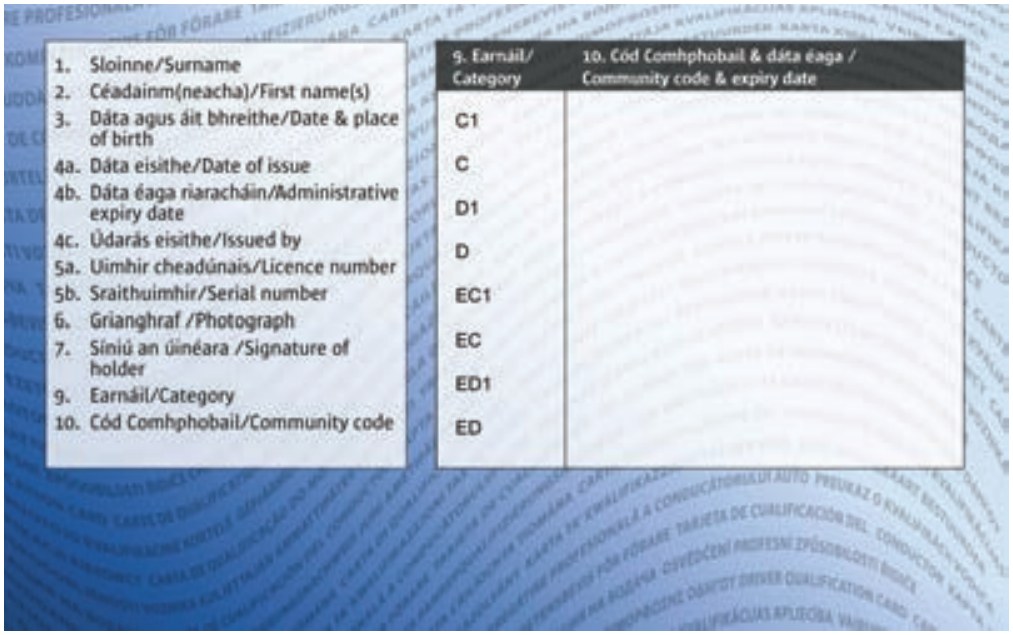
You must hold a Category CE, C1E, DE or D1E licence if you want to tow a heavier trailer. These are the licences that entitle you to drive the combinations of the towing vehicles and the trailer (see page 12). Equivalent licences are EC, EC1, ED or ED1.
Heavy goods vehicles and buses
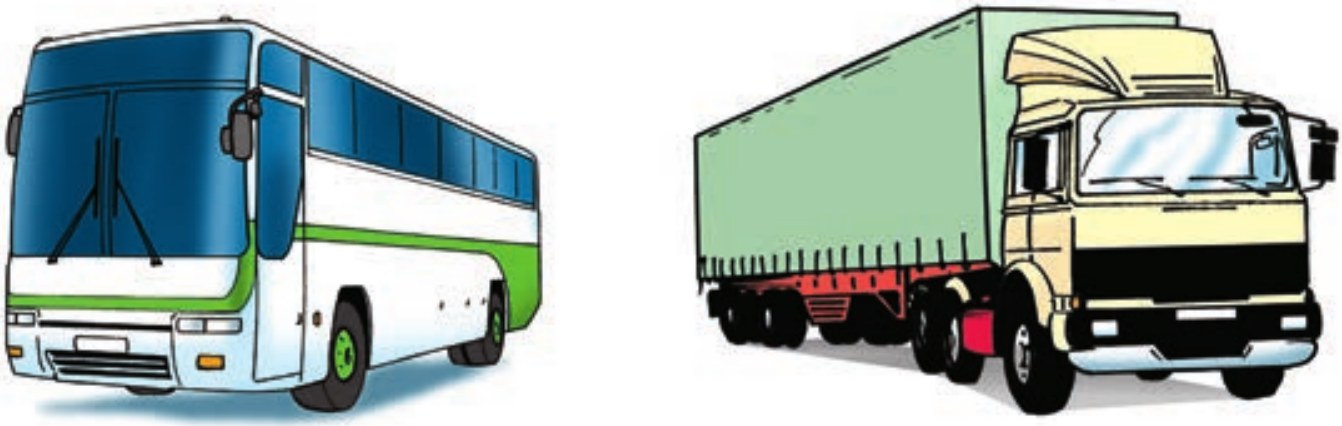
You must obey the law on tachographs. For full information please see www.rsa.ie.
Driver Certificate of Professional Competence (Driver CPC)
What is Driver CPC?
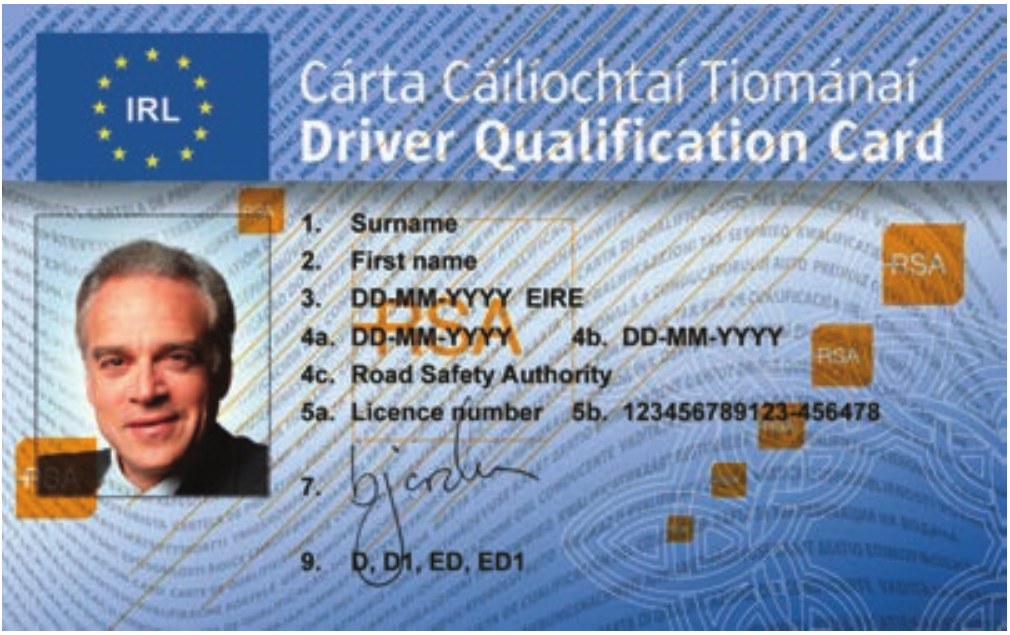
Driver CPC is a Certificate of Professional Competence for professional bus drivers (categories D1, D1E, D and DE) and professional truck drivers (categories C1, C1E, C and CE).
Equivalent licences are D1, ED1, D, ED, C1, EC1, C and EC.
Driver CPC was introduced across the EU in 2008 for professional bus drivers and in 2009 for professional truck drivers. The three key aims are to:
- ensure that all professional drivers have good driving and safety standards and that those standards are maintained throughout their career;
- create a common standard for the training and testing of drivers throughout the EU; and
- reduce fatalities and serious injuries on Irish and European roads.
The Driver CPC and you
New Professional Driver
Since 30 September 2014, in order to become a professional bus or truck driver, you must take the following five steps:
- Step 1: Pass a driver theory test and get a driver theory test certificate for category C or D or both as appropriate;
- Step 2: Get a learner permit in the relevant category;
- Step 3: Pass a 2-hour case study theory test (note Step 2 must be completed before Step 3 if under 21 when applying for a C or CE licence or under 24 when applying for a D or DE licence);
- Step 4: Pass a 90-minute practical driving test, including questions and demonstrations on how you would carry out a series of checks; and
- Step 5: Pass a 30-minute practical test.
Once you have completed these steps, you must complete an application form (available from the RSA) to apply for your Driver CPC qualification card. The driving test (Step 3) and practical CPC tests (Step 4) are carried out at RSA driving test centres and are usually taken one after the other.
Further information about the Driver CPC programme is available on the RSA website, www.rsa.ie. Information about the Driver CPC Theory Tests is available on the following website: www.theorytest.ie.
Already a Professional Driver
If you were already a professional bus driver or holder of category D licence on 10 September 2008 or a professional truck driver or holder of a Category C licence on 10 September 2009, you are automatically entitled to Driver CPC. This is called ‘acquired rights’.
In order that professional drivers maintain their rights, they must complete 35 hours of periodic refresher training every five years.
Where a professional driver seeks to maintain rights to drive both buses and trucks professionally, they must complete 42 hours of periodic refresher training every five years. Periodic training must include a minimum of 7 hours training in a single day each year.
Drivers of the following vehicles are exempted, that is, the driver will not need to hold or carry a CPC:
- Vehicles not allowed to exceed 45 kilometres per hour;
- Vehicles used or controlled by the armed forces, civil defence, the fire service, the prison service and forces responsible for maintaining public order;
- Vehicles undergoing road tests for technical development, repair or maintenance, or new or rebuilt vehicles which have not been put into service;
- Vehicles used in states of emergency or for rescue missions;
- Vehicles used for driving lessons for anyone who wants to get a driving licence or a CPC;
- Vehicles used for carrying passengers or goods for personal use and not for business;
- Vehicles carrying materials or equipment that the driver uses as part of their work, as long as driving the vehicle is not the driver’s main activity; and
- Vehicles used for non commercial purposes such as driving as an unpaid volunteer.
Learner permit
A learner permit is issued to allow a person to learn to drive. Before you apply for your learner permit you must pass your driver theory test (see pages 17–18). In the interest of your safety and that of other road users, you must meet certain conditions attached to the learner permit, while you are driving. See Section 2 for more details.
You must have a current learner permit to learn to drive and to take your driving test. Your permit must be for the same category of vehicle as the one you will use in your test.
Driver theory test
The driver theory test applies to anyone applying for a first learner permit in any category. Note that it will be regarded as a first learner permit in the category if an earlier learner permit has expired by 5 years or more.
The test is designed to check your knowledge of topics such as:
- Rules of the Road
- Risk perception
- Eco-driving
- Hazard awareness
- Good driving behaviour
The test is also designed to check your knowledge and understanding of all of the above and of ‘safety loading’ and ‘vehicle security’.
The CPC driver theory tests for truck and bus drivers have been merged with the Driver CPC Step 1 exam. There is also an option to sit both the truck and bus theory tests together.
The test involves answering questions on a computer in a test centre. It is designed for people who have little or no experience of using computers as well as those who do. It is carried out by the Driver Theory Test Service. Those with special needs or disabilities can request a reader or recorder facility to help them complete the test.
The driver theory test study materials CD is available from all good book shops and from www.theorytest.ie. Further information on the fees for sitting the theory test and the locations of test centres is also available on the website.
You should check that you are using the most up-to-date study material.
All categories of licences are subject to review. To make sure you comply with EU and Irish road safety policy, you are advised to check the website www.rsa.ie regularly.
Applying for a first learner permit
When you apply for your learner permit, you may attend in person at any one of the National Driver Licence Services (NDLS) centres located around the country or apply online. You must allow your photograph to be taken for the purposes of your application when you apply for your licence at the NDLS centre. To apply for a learner permit, you must be able to demonstrate that you normally live in Ireland. If you are studying or working abroad, you may still be considered normally resident in Ireland provided you return here regularly.
The following table outlines what else you will need when applying for a learner permit. The categories of vehicles are described in the table on pages 11 to 13. Further information about how to apply for a learner permit is available on the NDLS website, www.ndls.ie.
First learner permit
| Category of first learner permit | What you need | |
|---|---|---|
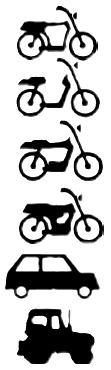 |
AM, A1, A2, A, B, W |
|
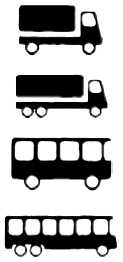 |
C1, C, D1 or D |
|
 |
BE |
|
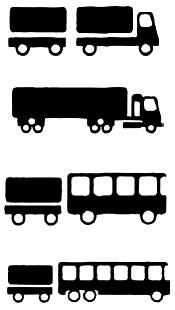 |
C1E, CE, D1E, DE |
|
* You will also need to have medical assessments from time to time when you have a full licence for these categories or when you renew.
Please note that what is needed for a first learner permit application can differ depending on your personal circumstances. Application requirements are also regularly updated. For these reasons, you are advised to visit the National Driver Licence Service website for details on what you need at the time of your application. See www.ndls.ie.
Eyesight and medical reports
- You can get eyesight and medical report forms from the National Driver Licence Service website, www.ndls.ie, or from the Road Safety Authority website, www.rsa.ie.
- A registered doctor or ophthalmic optician must fill in the eyesight report form.
- You must then sign it in front of them.
- A registered doctor must complete the medical report form.
- You must then sign it in front of them.
When you must supply a medical report
Not all applicants need to supply a medical report. However, you must supply one if any of the following statements applies to you.
- You are applying for a learner permit in any of the categories C1, C, D1, D, C1E, CE, D1E or DE.
- You will be 70 years of age or more on the first day the learner permit is being granted.
- You have any of the conditions listed in Appendix 1 at the back of this book.
- You are taking drugs or medications that are likely to affect your driving.
Note:
- If you suffer from a serious medical condition, for example, an irregular or abnormally fast or slow heart beat (arrhythmia) that has ever caused you to lose consciousness, then make sure you visit a doctor before you apply for a learner permit or licence.
- You are not allowed to hold a learner permit if you depend on or regularly abuse mind-altering substances.
Talk to your doctor if you have any doubts about your physical or mental fitness to drive.
You can get full details of the conditions attached to a learner permit on the National Driver Licence Service website, www.ndls.ie.
If your learner permit expires
No matter what type of vehicle you drive, you may get a third and subsequent learner permit only if you show that you have taken a driving test within the previous two years.
If you have not taken the test, you must give:
- evidence that you have applied to sit your driving test for that category of vehicle, or
- satisfy the NDLS that because of illness (as certified by a registered medical practitioner), you were not in a position to take a driving test.
‘Six-month rule’
If you are a first time holder of a learner permit for categories A, A2, A1, B, AM or W – that is, someone who never held a learner permit (or whose learner permit has expired by more than 5 years) in the category, you are not allowed to take a driving test for a six-month period after the start date of your permit. This is to allow you to gain experience of driving. Research shows that the longer a learner is supervised while driving, the less likely they are to be involved in a collision.
The ‘six-month rule’ does not apply to:
- category BE vehicles;
- the holder of a category A1 or A2 full licence who wishes to move progressively from the lower category of bike to the next higher category by having held the lower category for a minimum of 2 years;
- the holder of a current full driving licence in the same category from another country for more than 6 months, provided the holder forwards a current original driving licence and a letter of entitlement to the RSA from the recognised licensing authority in that country.
If you have any questions about getting a learner permit, visit www.ndls.ie or contact the NDLS by email at [email protected] or through their Customer Services at 076 1087 880.
Full driving licence
You need a full driving licence for the category of vehicle that you intend to drive. You can drive only the category or categories of vehicle for which the licence is issued.
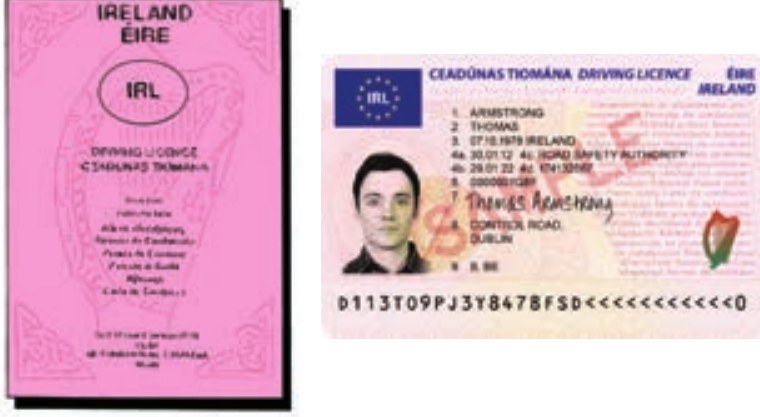
Old style · New style
Applying for your full licence
You may apply for your driving licence in person at any one of the National Driver Licence Service (NDLS) centres located around the country or apply online. When attending your appointment at the NDLS centre, you must bring with you:
- a completed application form;
- the relevant fee;
- your current or most recent learner permit; and
- evidence of your PPSN and address (if changed) dated within last 6 months.
You must allow your photograph to be taken as part of your application.
With the application for your first licence, you must include your certificate of competency to drive (outlined in Section 3). You may also need to supply other documents, such as a medical report, depending on your circumstances. A licence will not be granted to you if you have a driving licence which has been restricted, suspended or withdrawn in another EU Member State or a country recognised for driving licence exchange.
To apply for a driving licence, you must be able to demonstrate that you are normally resident in Ireland. If you are studying or working abroad, you may still be considered normally resident in Ireland provided you return here regularly.
You can get more information about applying for your full licence on the National Driver Licence Service (NDLS) website, www.ndls.ie.
Novice drivers
Remember to check the rules on displaying ‘N’ plates for novice drivers to see if they apply to you. If you are a first time holder of a full driving licence, you will be considered a ‘novice driver’ for 2 years from the date you received your first full licence.
As a novice driver, you must display N-plates on your vehicle for 2 years. N-plates must be displayed on any vehicle you get a licence to drive during that 2-year period.
This novice period applies only once. For example, if you hold a driving licence for a category of vehicle and after 2 years you become entitled to drive another category of vehicle, you do not become a ‘novice driver’ for the new category.
Novice drivers do not have to have an accompanying driver (but remember that this is still the case for learner drivers). However, a novice driver must not act as an accompanying driver for someone who holds a learner permit. If a learner driver is found driving without an appropriately qualified driver (that is, a person who has held a full driving licence in the same category for a continuous period of 2 years), the learner driver has committed an offence and is liable for a fixed-charge fine or penalty points, or both.
You can get further information about the N-plate requirements on the Road Safety Authority’s website, www.rsa.ie.
Renewing your licence
A driving licence is normally valid for 10 years for cars and motorcycles or 5 years for trucks and buses; you should renew your licence before this period passes. To renew your licence, you must apply in person to one of the NDLS centres . You will need to bring:
- a completed application form and fee,
- your current or most recent full licence, and
- evidence of your PPSN and address (if changed) dated within last 6 months.
If you are renewing a category C1, C1E, C, CE, D1, D1E, D or DE licence, you must include a medical report.
You should apply to renew your licence not later than three months before it expires.
If you hold a foreign valid licence from an EU/EEA country or other ‘recognised state’, it may be possible to exchange your licence for a full Irish driving licence.
You can get full details about renewing or exchanging your driving licence on the National Driver Licence Service website, www.ndls.ie.
Carrying a driving licence
Remember, you must carry your driving licence, learner permit and IBT Certificate of Satisfactory Completion (Am, A1, A2 or A) with you at all times when you are driving.
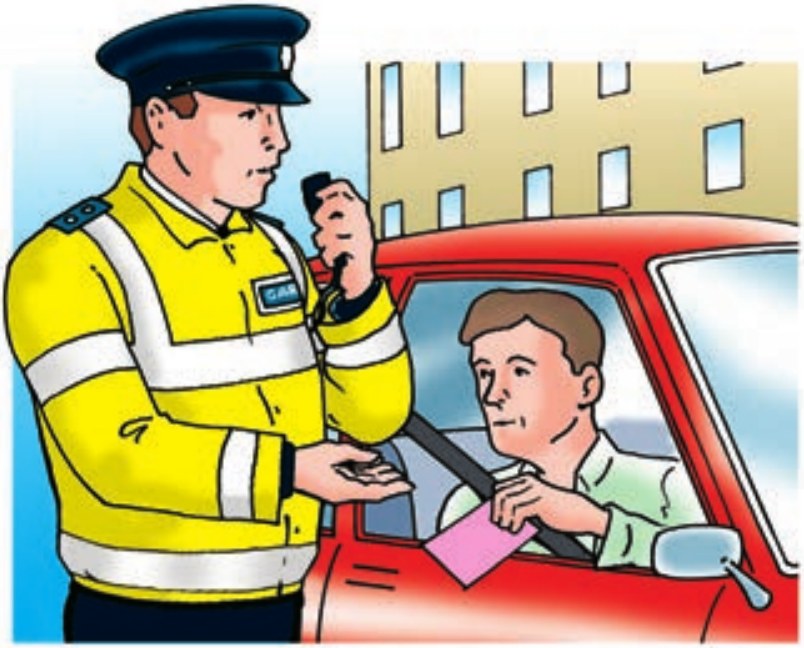
Driving legally
Before taking any vehicle on to the road you must be able to answer ‘yes’ to the following questions:
- Are you carrying your driving licence or learner permit?
- Are you carrying your IBT Certificate of Satisfactory Completion (Am, A1, A2 or A)?
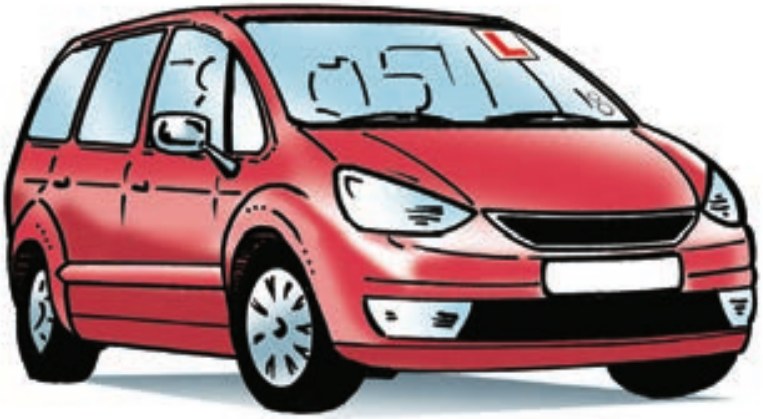
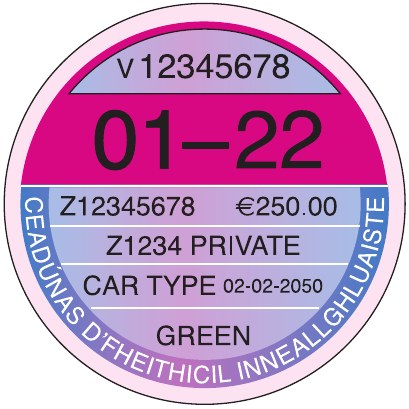
- Is the motor vehicle taxed?
- Is the tax disc on the windscreen?
- Is the insurance cover up to date and valid to cover you?
- Is the insurance disc on the windscreen?
- Is there an N-plate sign at the front and rear of your vehicle? (if you are a novice driver)
- Is the vehicle roadworthy and does it have an up-to-date National Car Test (NCT) Certificate on the windscreen? (if the vehicle is over four years old but not a taxi)
- Does the vehicle have a Certificate of Roadworthiness? (if you are using a coach, bus, ambulance, goods vehicle or goods trailer and it is over a year old)
- Are you carrying your CPC qualification card (as required) and digital tachograph card (as required)? (if you are a professional driver)
IMPORTANT MESSAGE TO OVERSEAS DRIVERS
You must drive on the left-hand side of the road in Ireland.
Tax
All motor vehicles must be taxed before the vehicle is taken on the road.
Insurance
All drivers must have insurance covering them to drive a vehicle in a public place. By law you must inform the insurance company of relevant information, such as penalty points and changes in your medical fitness to drive, before you drive a vehicle. If you are in any doubt you should discuss the matter with the insurance company. It is a serious offence to drive a vehicle that is not insured.
You need to display an up-to-date insurance disc. It is an offence not to have the disc on display.
Vehicles that do not need to display an insurance disc
- Motorcycles (with or without a side car)
- Tractors
All trailers must be covered by third party motor insurance. This applies whether the trailer is being towed or parked in a public place.
Even though the trailer does not have to display an insurance disc, you must have valid insurance cover.
- Vehicles showing a trade licence
- Vehicles owned or used by an exempted person as defined by the Road Traffic Acts, for example members of emergency services
National car test
Vehicle testing makes sure your vehicle is safe to use on the road. This is especially important for older vehicles.
- Passenger cars over 4 years old must have a valid NCT Certificate and show the NCT disc on the windscreen.
- Passenger cars between 4 and 10 years old must be tested every 2 years.
- Passenger cars over 10 years old must be tested every year.
- You may also avail of ‘voluntary early testing’ and get your car tested earlier than 90 days before its NCT due date. (Note: Availing of voluntary early testing will result in a change of date for the next NCT test.)
Further information on the NCT is available on the National Car Testing Service website, www.ncts.ie.
Commercial vehicle roadworthiness test
Commercial vehicles must pass a Commercial Vehicle Roadworthiness (CVR) test every year. This test assesses the roadworthiness of a commercial vehicle on the day of the test.
Goods vehicles, goods trailers with a design gross vehicle weight of more than 3,500kg, ambulances, buses (including minibuses), motor homes and coaches must have a valid Certificate of Roadworthiness.
As an owner of a commercial vehicle, you must:
- inspect, maintain and repair your vehicle regularly and perform daily walk around checks of your vehicle in order to maintain a commercial vehicle in a safe and roadworthy condition over its lifetime;
- keep records of reported defects, maintenance and repair;
- nominate a ‘Suitably Qualified Person’ (SQP) to be responsible for carrying out inspection and maintenance of your vehicles and any repairs needed to rectify defects on your vehicles or trailers.
The SQP can be a mechanic or equivalent person with the relevant experience or qualifications to enable them to assess the roadworthiness of a vehicle and carry out any necessary repairs.
All Heavy Commercial Vehicle (HCV) owners/operators must complete and submit an online self-declaration every year to the RSA providing details such as:
- Number of vehicles in your fleet and their details;
- Any safety inspections and maintenance controls;
- Name of the relevant person who is responsible for vehicle maintenance.
You can get more information about the Certificate of Roadworthiness and testing requirements on the Commercial Vehicle Roadworthiness test website, www.cvrt.ie.
Certificate of Professional Competence
Professional bus and truck drivers must also carry their Driver CPC qualification card.