Traffic lights and signals
From the Rules of the Road published by the Road Safety Authority (RSA). iTest.ie is not affiliated with the RSA — check rsa.ie for the latest edition. Read in the app (contents, picks up where you left off) →
In this section
This section builds on Section 6, which covers traffic signs and road markings.
This section covers two general forms of traffic signals:
- traffic lights, which direct the flow of traffic, and
- signals given by motorists and cyclists to indicate their intent.
Traffic lights
These include lights controlling junctions and pedestrian crossings.
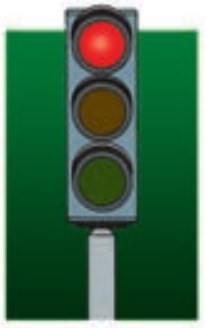
A red light means ‘Stop’. If the light is red as you approach it, you must not go beyond the stop line at that light or, if there is no stop line, you must not go beyond the light.
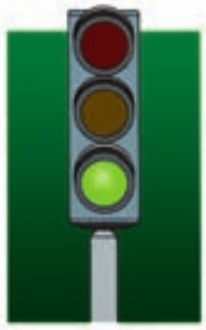
A green light means you may go on if the way is clear. Take special care if you intend to turn left or right and give way to pedestrians who are crossing. A green light is not a right of way – it is an indication that you can proceed with caution.
REMEMBER
A green light is not a right of way, it is an indication that you may proceed with caution, but only if the way is clear.
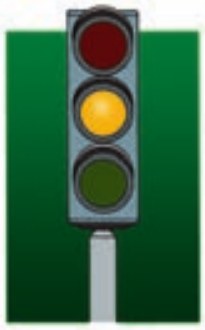
An amber light means that you must not go beyond the stop line or, if there is no stop line, you must not go beyond the light. However, you may go on if you are so close to the line or the light when the amber light first appears that stopping would be dangerous.
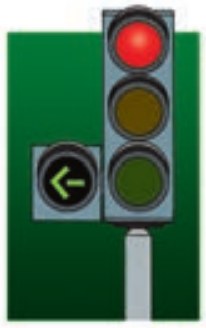
A green arrow (also known as a filter light) means that you may move on in the direction of the arrow, assuming it is safe and the way is clear, even if a red light is also showing.
If you wish to turn right at a set of traffic lights that has an arrow to the right (or white rectangular box with white arrow), drive into the junction when you see a green light. Take care not to block any oncoming traffic. Then, when it is safe, finish your turn. You should only wait for the filter arrow for turning right when you are in the junction and if it would be dangerous to finish your turn before the filter light appears.
A flashing amber arrow pointing left can appear at a junction with another road. It means that you may move on past the traffic light, but only if you first give way to traffic already coming through the junction on the other road.
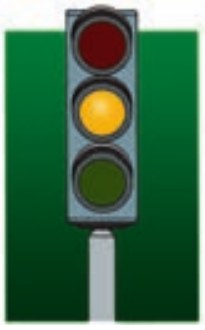
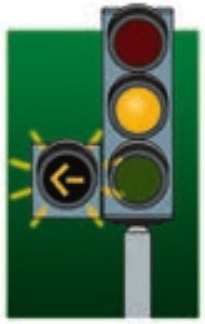
Remember that a flashing amber light at a pelican crossing means you must yield to pedestrians. See Section 18, on pedestrian lights.
REMEMBER
You should always approach traffic lights at a speed that will allow you to stop if the amber light appears.
Note: If the traffic lights at a controlled junction are out of order, you must first stop at the control line and only proceed when it is safe to do so ensuring you yield to all other traffic who have right of way.
Cycle track lights
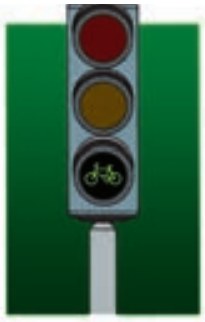
- A red light showing a figure of a cyclist means that the cyclist must stop at the traffic light.
- A green light showing a figure of a cyclist means the cyclist may move beyond the light as long as this does not put other road users in danger.
- A flashing green light or an amber light showing a figure of a cyclist means the cyclist may not cross the road unless they had started crossing when there was a steady green cyclist light.
REMEMBER
Cyclists – you must obey the traffic lights and may only proceed past a green traffic light if it is safe to do so.
Signals by motorists and cyclists
A motorist must always signal before they change their course. This means signalling clearly and in good time before:
- moving off,
- turning right or left,
- changing lanes,
- overtaking,
- slowing down, or
- stopping.
Signalling
Signals are an indication of intent – they do not confer a right of way. The law requires you to signal properly before moving off, turning right or left, changing lanes, overtaking, slowing down or stopping. You must signal clearly and in good time.
If you are concerned that, for whatever reason, your direction indicators or stop lamps are not giving an adequate signal, use clear, decisive hand signals as well.
An indicator is not a right of way.
Before you start to manoeuvre, you must exercise due care and attention with particular heed to other road users, road conditions and how your driving will impact other road users.
Always take care, especially when you:
- intend to change lane;
- turn across oncoming traffic;
- drive onto or exit from a roundabout; and
- drive into or reverse into a parking space.
Hand signals
Make sure you use hand signals to help, rather than confuse, other road users. Make sure you are familiar with the hand signals shown on the next two pages. Be prepared to use the appropriate hand signal where it will help others to understand your intentions.
Learner drivers should be guided by their approved driving instructor on when and where a hand signal might be particularly useful. For example:
- when turning right just after changing position to pass stationary traffic on the left; or
- to indicate to oncoming traffic that you intend to give way at a pedestrian crossing; or
- where you believe another road user may not be able to see your flashing indicators; or
- where you believe your indicators are not working (you should have them repaired before continuing your journey).
The signals for cyclists and motorcyclists also apply to motorists and people in charge of horse-drawn vehicles and agricultural machinery not fitted with indicators.
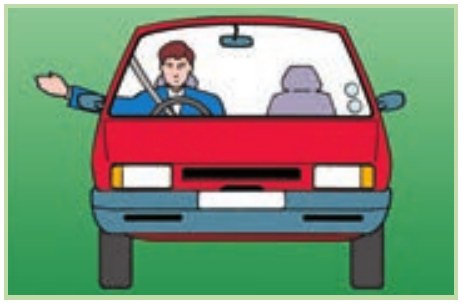
The following are the hand signals to be used:
Hand signals to be given to traffic behind you
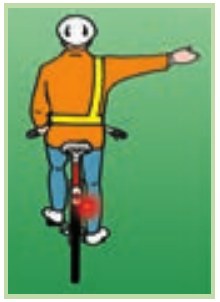
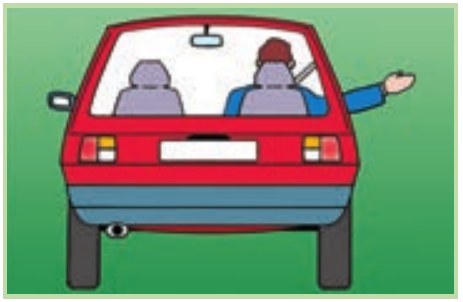
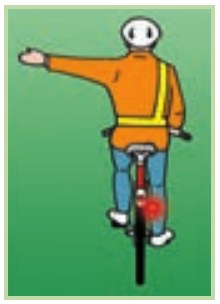
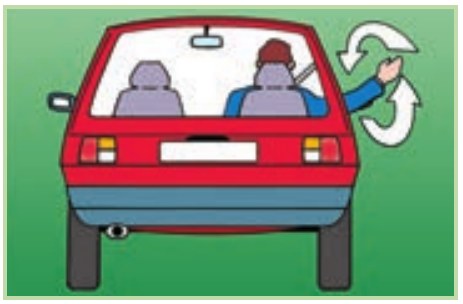
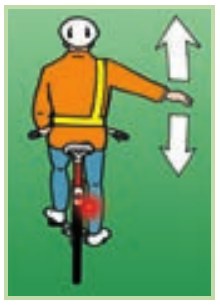
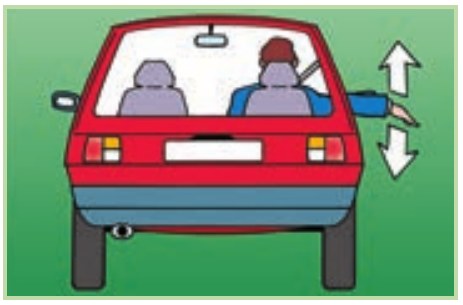
Hand signals to be given to a pointsman and oncoming traffic
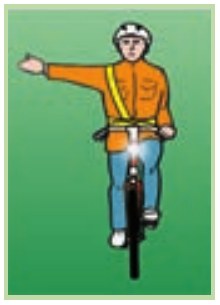
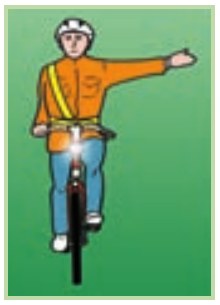
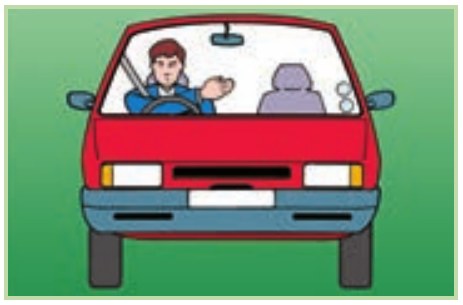
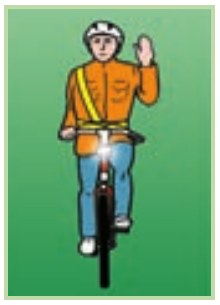
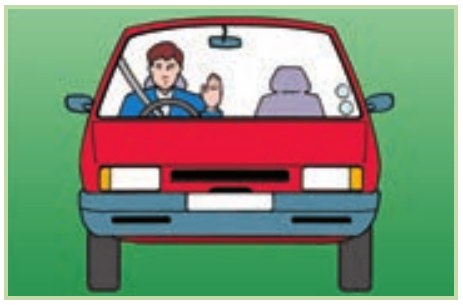
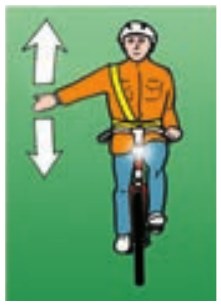
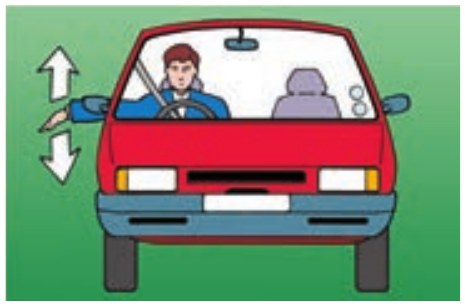
The signals for the cyclist apply also to a motorcyclist and to a person in charge of a horse-drawn vehicle.
REMEMBER
Signals show only what you are intending to do – they never give you right of way.